
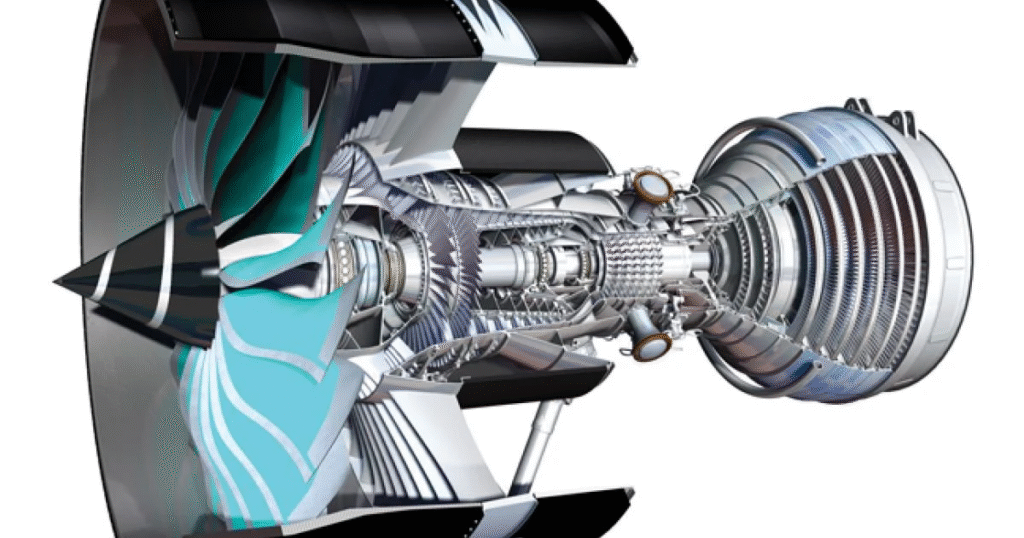
Rolls-Royce, and most people immediately picture sleek luxury motorcars with handcrafted interiors. But in reality, Rolls-Royce Motor Cars—the luxury vehicle brand owned by BMW—and Rolls-Royce Holdings plc are two entirely different entities. Rolls-Royce Holdings: Explore Powerful Aerospace Tech focuses on the company’s powerful aerospace technology, advanced engineering, aircraft engines, and innovative solutions for the aviation industry.
The latter is a British engineering giant operating at the highest levels of industrial technology. It designs, manufactures, and maintains complex power and propulsion systems that keep commercial jetliners in the sky, power nuclear submarines, secure energy grids, and drive massive naval vessels across the world’s oceans.
While passenger aircraft take off every second, few travelers realize the massive engineering web working quietly beneath the wing. From civil aviation and defense to microgrids and small modular nuclear reactors, this guide breaks down how Rolls-Royce Holdings shapes modern power and advanced transportation.
What Is Rolls-Royce Holdings?
Rolls-Royce Holdings plc is a global power systems company headquartered in London. Rather than consumer electronics or passenger vehicles, its entire business revolves around high-stakes, safety-critical environments where system failure is simply not an option.
                      ROLLS-ROYCE HOLDINGS PLC
                                 │
   ┌─────────────────┬───────────┴───────────┬─────────────────┐
   ▼                 ▼                       ▼                 ▼
Civil Aerospace   Defence Systems       Power Systems    Nuclear & Future Tech
(Jet engines &    (Military aviation,  (mtu generators,  (Submarine reactors,
 flight care)      subs & GCAP)         marine & grid)   SMRs & hydrogen)
The company operates primarily across four core pillars:
- Civil Aerospace: Designing and building commercial jet engines for widebody passenger planes, regional aircraft, and high-end business jets.
- Defence: Supplying aero-engines for military transport, fighter jets, combat helicopters, and nuclear propulsion systems for the UK’s Royal Navy submarine fleet.
- Power Systems (under the mtu brand): Producing heavy-duty diesel and gas engines, microgrids, battery energy storage, and backup generators for data centers, hospitals, and marine ships.
- Nuclear and Future Energy: Pioneering Small Modular Reactors (SMRs) to deliver scalable, low-carbon nuclear energy directly to regional power grids.
Civil Aerospace: The Jet Engines Behind Global Flight
When you take a long-haul flight across the Atlantic or Pacific, there is a strong chance you are flying on an aircraft powered by Rolls-Royce’s famous Trent engine family.
Civil Aerospace represents the largest chunk of Rolls-Royce’s business. Unlike car engines that run for a few hours at a time, commercial jet engines must run at maximum output under brutal temperatures, extreme pressures, and harsh weather conditions—often for 15 hours straight.
                      TRENT ENGINE FAMILY AT A GLANCE
                                     │
    ┌────────────────────────────────┼────────────────────────────────┐
    ▼                                ▼                                ▼
Trent 1000                       Trent XWB                       Trent 7000
(Boeing 787 Dreamliner)          (Airbus A350 family)            (Airbus A330neo)
How the Business Model Works: Power by the Hour
One of Rolls-Royce’s biggest business innovations was introducing “Power by the Hour” (now called TotalCare).
Instead of just selling a physical engine to an airline and walking away, Rolls-Royce charges airlines based on the actual flight hours the engine performs. Rolls-Royce retains responsibility for engine maintenance, monitoring, and repairs. This aligns the incentives perfectly: airlines get maximum aircraft uptime, while Rolls-Royce is motivated to design engines that stay durable and run flawlessly without unexpected breakdowns.
Business Aviation: The Pearl Engine Family
It isn’t just commercial passenger planes. Rolls-Royce is also a dominant supplier for ultra-long-range business jets. The Pearl engine family powers top-tier corporate aircraft like the Bombardier Global 7500 and Dassault Falcon 10X, allowing business leaders to fly non-stop across continents with exceptional fuel efficiency and minimal cabin noise.
UltraFan: Redefining Aircraft Propulsion
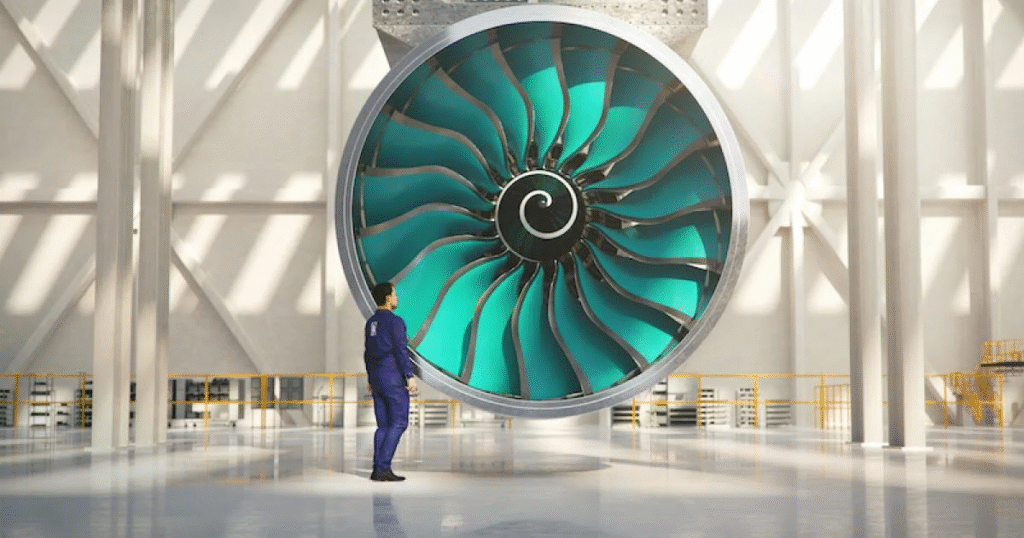
For years, aerospace engineers have been working on the next leap in jet propulsion. Rolls-Royce’s flagship research initiative is the UltraFan engine program.
Traditional turbofan engines feature a fan at the front that spins at the exact same speed as the internal turbine behind it. UltraFan introduces a powerful planetary gearbox between the fan and the internal core. This design trick allows the giant front fan to spin slower (maximizing airflow efficiency) while the inner turbine core spins faster (maximizing thermodynamic efficiency).
TRADITIONAL TURBOFAN:  [ Fan ] ═════════════════════ [ Turbine Core ]
                        (Spins at same speed as core)

ULTRAFAN DESIGN:      [ Giant Fan ] ── [ GEARBOX ] ── [ Turbine Core ]
                       (Spins slower for airflow)      (Spins faster for heat efficiency)
Key Engineering Benefits of UltraFan:
- ~25% Fuel Savings: Delivers a 25% improvement in fuel efficiency compared to first-generation Trent engines.
- 100% SAF Compatibility: Designed from day one to run entirely on 100% Sustainable Aviation Fuel (SAF), helping airlines drastically cut lifecycle carbon emissions.
- Scalable Tech: The architecture can be scaled down for narrow-body aircraft or scaled up for massive widebody long-haul jets.
Defence Engineering: Submarines, Fighters, and Stealth
Rolls-Royce’s Defence division works in environments where national security depends on engineering perfection.
1. Nuclear Submarine Propulsion
Rolls-Royce has provided nuclear propulsion for every single Royal Navy submarine since Britain’s first nuclear sub, HMS Dreadnought, launched in 1960. A naval nuclear reactor provides virtually unlimited range and power, allowing submarines to remain submerged deep underwater for months at a time without needing to surface for fuel.
2. Next-Gen Fighter Jets (GCAP)
Rolls-Royce is a critical partner in the Global Combat Air Programme (GCAP)—a joint international initiative alongside Britain, Italy, and Japan to build a sixth-generation stealth fighter jet. Rolls-Royce is co-developing the advanced power and propulsion system, which must generate not only massive thrust but also huge amounts of onboard electrical power to run future laser systems, advanced radars, and AI computing gear.
3. Military Helicopters and Transports
From powering the iconic C-130J Super Hercules transport aircraft to providing engines for vertical-lift military helicopters, Rolls-Royce military engines operate under harsh desert dust, icy conditions, and high altitudes.
Power Systems: Energy Beyond the Skies
While jet engines get the headlines, Rolls-Royce Holdings also powers critical systems on terra firma through its Power Systems division, operating under the renowned mtu brand name.
                         MTU POWER APPLICATIONS
                                    │
   ┌───────────────────┬────────────┴────────────┬───────────────────┐
   ▼                   ▼                         ▼                   ▼
Data Centers        Naval & Commercial        Microgrids &        Heavy Industrial
(Emergency backup)  (Yachts, ferries & subs)  (Battery storage)   (Mining trucks & trains)
Data Centers and Hospitals
Ever wonder what keeps cloud servers running during a power outage? Major global data centers use massive mtu diesel and gas generator sets for emergency backup power. When the main power grid flickers, these engines start within seconds to keep server racks and hospital life-support systems online without losing a single byte of data.
Marine and Rail Propulsion
From luxury superyachts and high-speed passenger ferries to heavy freight locomotives and mining haul trucks, mtu engines are built for heavy continuous torque and high durability under intense daily workloads.
Renewable Microgrids & Energy Storage
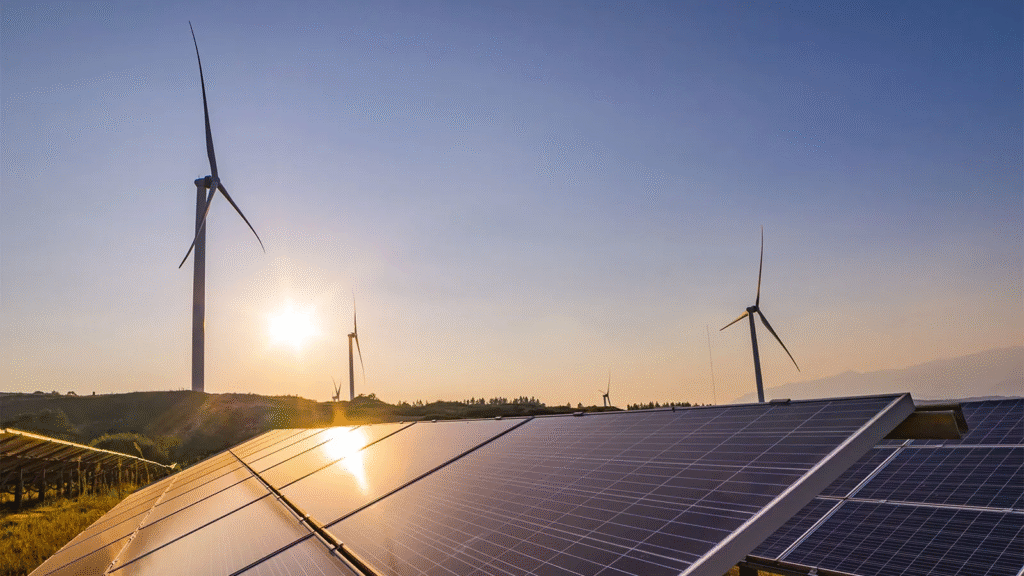
As world power grids transition to solar and wind, energy generation becomes variable. Through products like the mtu EnergyPack, Rolls-Royce provides large-scale battery energy storage systems (BESS). These containerized battery banks store excess solar and wind power during peak production and discharge it into the grid when the sun goes down or the wind stops blowing.
Digital Twin Technology and Predictive Maintenance
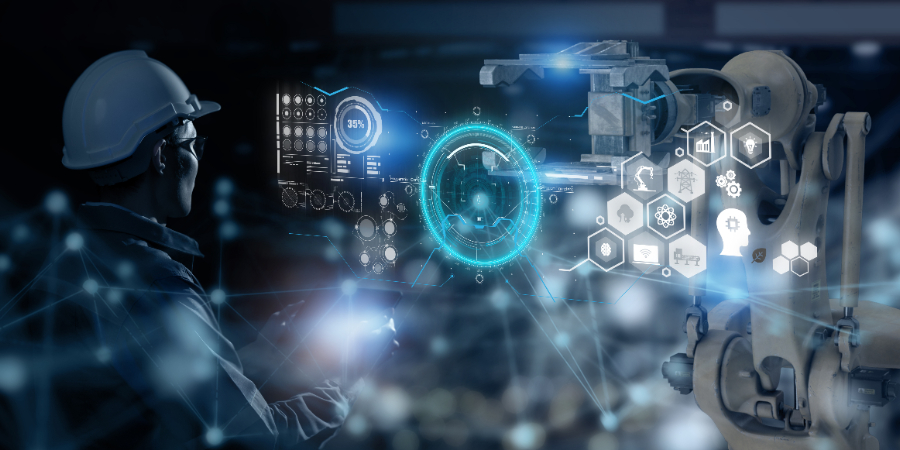
A key element of modern Rolls-Royce engines is that they are constantly “talking” to engineering centers on the ground.
Modern jet engines are packed with hundreds of digital sensors tracking temperature, oil pressure, vibration, airflow, and fuel flow in real-time. Millions of data points are beamed back via satellite to Rolls-Royce ground stations while the plane is still in mid-air.
[ In-Flight Jet Engine ] ──(Satellite Data Link)──> [ Ground Operations Center ]
                                                                │
                                                    [ Real-Time Digital Twin ]
                                                                │
                                                    (Flags maintenance needs BEFORE
                                                     a part wears out)
What Is a Digital Twin?
For every physical engine flying in the sky, Rolls-Royce maintains a virtual “Digital Twin”—a software model powered by live operational data.
By running sensor data through machine learning models, engineers can detect subtle operational shifts before a pilot ever notices a gauge flicker. If a pump or turbine blade shows early signs of wear, maintenance crews receive alerts to swap out the part during the plane’s next scheduled gate stop, eliminating unexpected flight delays.
Nuclear SMRs: The Future of Clean Energy
Beyond jet propulsion, Rolls-Royce is positioning itself as a major player in clean grid energy through its Small Modular Reactor (SMR) program.
Traditional nuclear power plants are massive, bespoke mega-projects that take over a decade to build and require tens of billions in upfront capital. Rolls-Royce’s SMR approach completely flips this construction model:
- Factory-Built Components: Instead of pouring concrete on-site for ten years, ~90% of an SMR’s components are manufactured in a standardized factory environment.
- Easy Transport: Parts are built in modular units that fit onto standard flatbed semi-trucks or freight trains for transport.
- Rapid Installation: An SMR can be assembled on-site in a fraction of the time, dramatically reducing capital risk.
- Consistent Power Output: A single Rolls-Royce SMR factory unit takes up about the footprint of two football fields while producing ~470MW of electricity—enough clean power to supply a city of 1 million homes for over 60 years.
Rolls-Royce in India: Strategic Partnerships
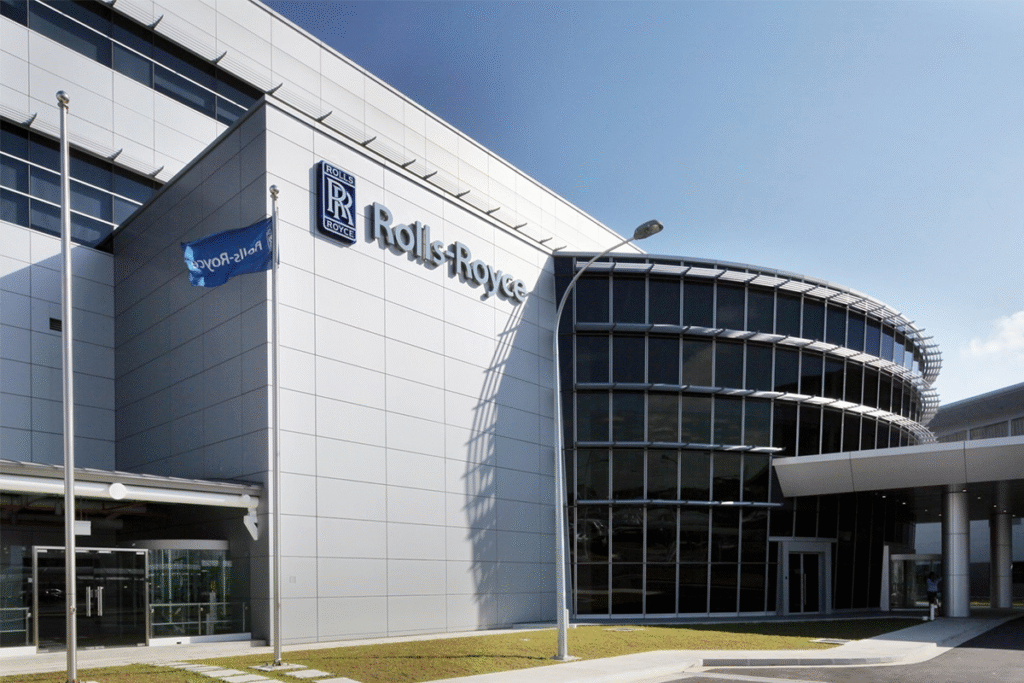
India represents a core growth market and strategic engineering hub for Rolls-Royce Holdings across Civil Aerospace, Defence, and Power Systems.
For over eight decades, Rolls-Royce has supplied power systems to the Indian Armed Forces. Today, the relationship extends far beyond buying off-the-shelf military gear:
- Local Manufacturing and Supply Chain: Rolls-Royce collaborates with Indian aerospace partners like Hindustan Aeronautics Limited (HAL) to co-manufacture engine components locally.
- Engineering and Technology Centers: Through its dedicated engineering centers in Bengaluru and Pune, Indian engineers actively contribute to global design, digital twin analytics, and software testing for international engines.
- Defence Indigenization: As India accelerates its Atmanirbhar Bharat (self-reliant India) initiative in defense technology, Rolls-Royce is actively partnering with local agencies to offer joint technology transfers for future naval and combat aircraft engines.
Summary: A Blueprint for Complex Engineering
Rolls-Royce Holdings is far more than a luxury heritage name. It is an industrial engine of modern global infrastructure.
| Division | Primary Focus | Key Products & Tech |
| Civil Aerospace | Commercial & Business Aviation | Trent Engine Family, Pearl 10X, UltraFan |
| Defence | Military Air, Sea & Submarines | Submarine Nuclear Reactors, GCAP Fighter Tech, Transport Engines |
| Power Systems | Terrestrial & Marine Power | mtu Generators, Battery Storage (EnergyPack), Marine Engines |
| Future Energy | Clean Grid Power | Small Modular Reactors (SMRs), Hydrogen & SAF Integration |
Whether it’s ensuring a transoceanic flight lands safely, keeping hospital generators running during a storm, or designing clean nuclear reactors for future cities, Rolls-Royce Holdings remains at the absolute forefront of advanced engineering.