
The low-waste movement works to replace this with a circular economy, where items are continuously reused, repaired, recycled, or composted.
It encourages manufacturers to accept responsibility for product lifespan. As zero-waste author Bea Johnson famously observed, “Waste is a design flaw.” When products are created with high-quality materials and easy disassembly in mind, waste is practically eliminated from the process.
Why Cutting Down on Waste Really Matters
Throwing an item into the trash bin doesn’t make it vanish. Every product sitting on store shelves carries an invisible supply-chain footprint that requires substantial earth resources before it ever reaches your hands.
$$\text{Supply Chain Footprint} = \text{Raw Material Extraction} + \text{Industrial Water \& Energy} + \text{Factory Emissions} + \text{Shipping Fuel}$$
When a single-use plastic fork, water bottle, or coffee lid is discarded after five minutes of use, that entire upstream investment of energy, clean water, and labor goes straight into a pit in the ground.
The Hidden Problem with Microplastics
Unlike natural materials like wood or cotton, synthetic plastics never truly biodegrade. Instead, sunlight and weather break them down into microscopic fragments known as microplastics.
These tiny particles wash into local soils, rivers, and oceans. Marine creatures ingest them, allowing microplastics to work their way right up the food chain and onto human dinner plates. Cutting down on single-use plastic packaging stops this persistent contamination cycle right at its source.
Key Benefits of a Low-Waste Lifestyle
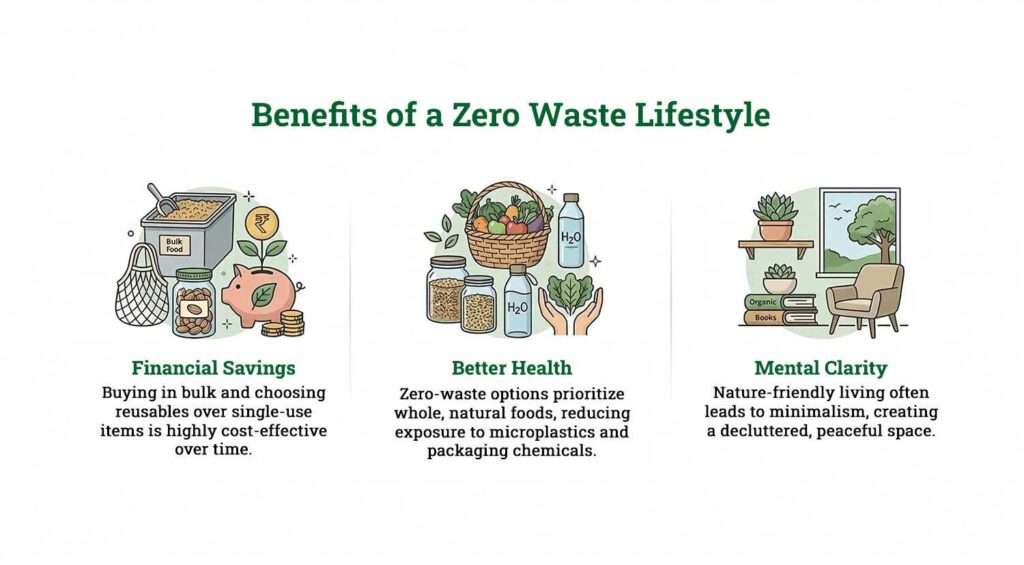
Making low-waste choices creates genuine improvements across your personal life, budget, and living space:
| Benefit Category | Practical Real-World Impact |
| Environmental Protection | Dramatically cuts down on landfill volume, reduces industrial manufacturing emissions, and keeps plastic debris out of oceans. |
| Financial Savings | Reusables eliminate the non-stop cycle of repurchasing disposables like paper towels, plastic wrap, trash bags, and bottled drinks. |
| Healthier Home Environment | Moving away from single-use plastics reduces your family’s exposure to chemical additives like BPA and synthetic microplastics. |
| Less Clutter & Chaos | Shopping with clear intention keeps kitchen counters tidy, drawers organized, and rooms easier to clean. |
| Sense of Purpose | Knowing that your day-to-day decisions align with long-term planetary health brings peace of mind and quiet confidence. |
Overcoming Common Everyday Challenges
Shifting long-held habits takes patience. Running into friction along the way is a completely normal part of the process. Here is how to navigate the most common bumps in the road:
1. The Time Commitment
- The Issue: Meal prepping, packing reusables, and cooking from scratch require extra daily planning.
- The Easy Fix: Start small. Place three folded cloth tote bags in your backpack, purse, or car glovebox so they are always ready when you run unexpected errands.
2. Lack of Unpackaged Bulk Stores
The Issue: Package-free grocery stores can be rare, expensive, or hard to find in many neighborhoods.
The Easy Fix: Visit local outdoor farmers’ markets, opt for larger family-sized packages to reduce overall plastic volume per pound, or buy pantry staples like oats and flour online in large paper sacks.
3. Pre-Packaged Convenience Foods
- The Issue: Busy work schedules make grab-and-go snacks in plastic wrappers very tempting.
- The Easy Fix: Keep everyday snacking simple. Reach for naturally pre-wrapped foods like bananas, apples, or oranges, and keep mixed nuts or homemade granola stored in small stainless steel tins.
4. Social Pressure & Unsupportive Friends

- The Issue: Friends or family members might find your new sustainable habits unusual or inconvenient.
- The Easy Fix: Lead quietly by example without preaching. Simply bring your reusable coffee cup or water bottle along—people often adopt healthy habits on their own once they see how easy and practical they are.
Room-by-Room Guide to Cutting Household Waste
The Kitchen
The kitchen usually produces the largest volume of daily household trash. A few simple swaps can make an immediate difference:
- Replace single-use paper towels with washable cotton cloths or microfiber rags.
- Store leftover meals in glass food containers or wide-mouth mason jars instead of using plastic cling wrap.
- Choose loose, unpackaged fruits and vegetables rather than produce sitting on plastic or styrofoam trays.
- Collect food scraps in a small countertop bin for municipal green bins or backyard composting.
The Bathroom
Bathrooms are often cluttered with single-use plastic bottles, synthetic packaging, and disposable toiletries:
Switch from bottled liquid body wash and shampoo to solid bar soaps and concentrated shampoo bars.
Replace plastic toothbrushes with biodegradable bamboo alternatives.
Try a classic metal safety razor with replaceable steel blades instead of plastic disposable razors.
Swap disposable cotton pads and makeup wipes for soft, washable fabric rounds.

On the Go
A little bit of preparation prevents you from needing throwaway items while running errands or commuting:
- Keep a lightweight, foldable cloth tote bag inside your everyday carry bag.
- Carry a sturdy, refillable stainless steel water bottle wherever you go.
- Bring a insulated travel cup along for morning coffee or tea orders.
- Pack lunches in durable stainless steel containers alongside real metal cutlery from your kitchen drawer.
Choosing Sustainable Grocery Bag Materials
Replacing disposable plastic shopping bags is one of the easiest habits to start. When selecting reusable bags, look for natural, durable materials that stand up to heavy use:
- Organic Cotton: Soft, easily washable, incredibly durable, and fully biodegradable at the end of its life.
- Jute / Hessian: An exceptionally strong natural plant fiber that can easily carry heavy cans, jars, and bulky groceries.
- Hemp: A highly resilient natural fabric grown with low water usage and zero synthetic pesticides.
- Recycled PET (R-PET): Fabrics manufactured from recycled plastic bottles, giving existing plastic waste a second useful lifespan.
A Simple 4-Week Low-Waste Action Plan
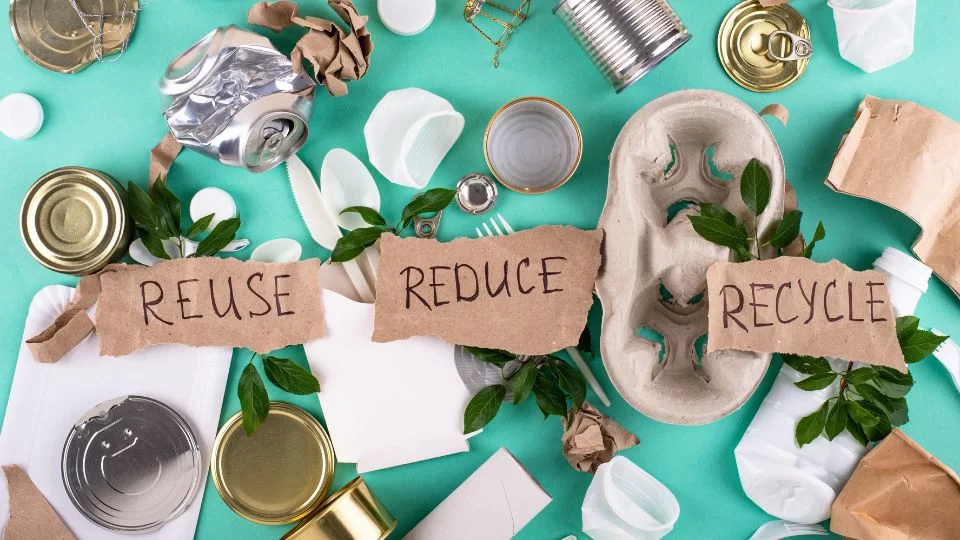
You don’t need to transform your entire house overnight. Pacing your habit changes over four manageable weeks ensures they actually stick for good:
1.Week 1: Master Daily On-the-Go Reusables:Focus on simple daily items.
Keep a refillable water bottle, reusable coffee travel mug, and a compact cloth shopping bag right by your front door or inside your vehicle.
2.Week 2: Transform Kitchen Habits:Tackle high-volume kitchen waste.
Replace single-use paper towels with washable cotton cloths, and start storing leftovers in glass containers or saved glass jars.
3.Week 3: Simplify Bathroom Toiletries:Phase out single-use plastics.
Switch to solid bar soap and shampoo bars, and replace your worn plastic toothbrush with a natural bamboo one.
4.Week 4: Begin Food Scrap Composting:Divert organic matter from landfills.
Set up a small food-scrap container on your kitchen counter and start saving vegetable peels, coffee grounds, and food scraps for a compost bin or local green waste drop-off.
Frequently Asked Questions
1.What is the ultimate goal of a low-waste lifestyle?
The main goal is to drastically reduce your personal household trash, sending as little waste as possible to landfills, incinerators, or waterways through careful purchasing, regular repair, composting, and daily reusables.
2.Is living a low-waste life expensive?
No, it almost always saves money in the long run. While durable goods like stainless steel water bottles or glass storage containers require a small upfront cost, they eliminate continuous spending on throwaway items like paper towels, ziplock bags, and bottled drinks.
3.Do I need a specialized zero-waste store nearby to participate?
Not at all. You can live a low-waste lifestyle anywhere by choosing loose fresh produce at standard supermarkets, picking items packaged in glass or cardboard over plastic, and simply buying fewer unnecessary goods overall.
4.What should I do with plastic items I already own?
Keep using them! Throwing away working plastic containers or utensils just to replace them with aesthetic glass or wooden items creates unnecessary waste. Use what you already have until it breaks or wears out naturally.
5.Why isn’t recycling by itself enough to solve waste problems?
Most plastics can only be recycled once or twice before the material degrades into low-quality plastic that ends up in a landfill anyway. Refusing unnecessary items and reducing consumption at the source are far more effective long-term strategies.