The Ramayan is far more than a foundational pillar of Indian culture and history—it is a timeless treasury of aesthetics. From the regal elegance of Ayodhya to the austere beauty of forest exile, the attire and adornments of Shri Ram, Mata Sita, Lakshman, Hanuman, and Ravan have captivated artistic imagination for centuries.
When we observe traditional celebrations, classical dance performances, or modern ethnic runways today, the visual vocabulary of the Ramayan remains everywhere. We see flowing silk drapes, ornate kamarbandhs, sculpted mukuts, and gold temple jewellery.
How did people actually dress during the period depicted in the epic? What materials were available, and who wore them? If we were to reconstruct these royal wardrobes today, how much would they cost in modern Indian rupees?
Let’s explore the world of Ramayan-inspired fashion—examining ancient garments, traditional jewellery, hair styling, footwear, fabrics, and contemporary price estimates.
1. What Did People Wear During the Ramayan Period?
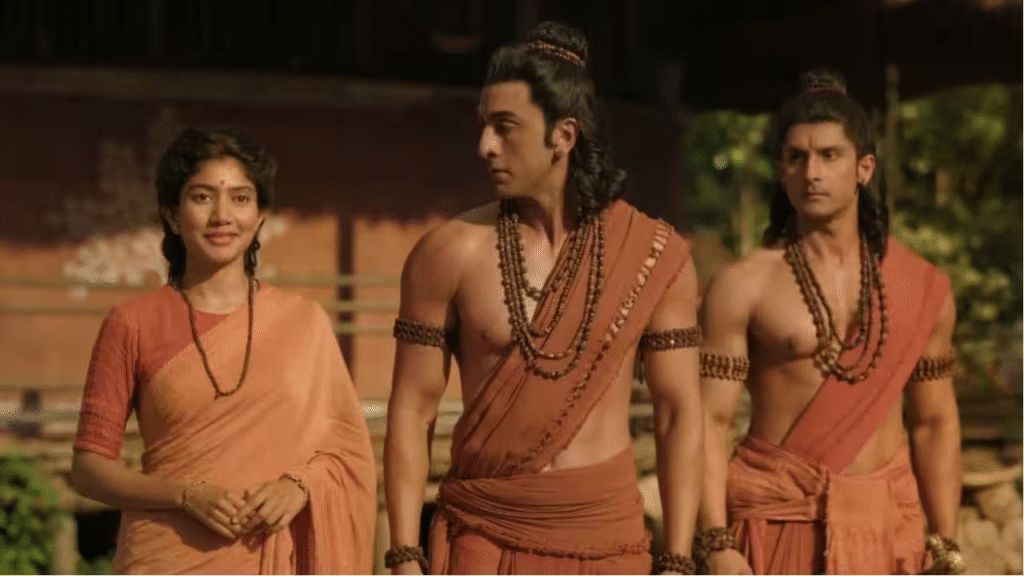
Clothing during the Ramayan era differed fundamentally from modern wardrobe choices. Tailored clothing with complex seams, fitted blouses, and stitched trousers— ubiquitous today—was not the standard. Instead, ancient Indian attire relied primarily on the art of draping unstitched pieces of woven fabric around the body.
       [ Uttariya / Angavastram ] ── Upper drape across shoulders
                   │
                   ▼
         [ Mekhala / Kamarbandh ] ── Ornamental waist belt
                   │
                   ▼
         [ Antariya / Dhoti ] ──── Lower body wrap
Key garments of the era included:
- Antariya: The primary lower garment, wrapped around the waist and legs. It was typically a long length of unstitched cloth draped in styles closely resembling the modern dhoti or lower saree drapes.
- Uttariya: An upper garment or shawl draped over the shoulders or across the torso, worn by both men and women.
- Mekhala: A functional yet ornamental waistband used to secure the antariya while adding structural detail to royal attire.
- Fine Silks and Cottons: Textiles varied by status and occasion. The Valmiki Ramayan explicitly references fine silk garments (kauseya) and intricately woven fabrics associated with royalty.
Historical Context Note: The classic ensemble seen today—a saree paired with a tailored, stitched blouse and petticoat—is a much later historical evolution. Ancient depictions highlight wrapped uttariyas and artfully folded drapes rather than fitted tailoring.
2. Character-by-Character Wardrobe Breakdown
Mata Sita: The Perfection of Grace and Regal Simplicity
Mata Sita’s attire in traditional iconography spans two distinct phases: her royal life in Ayodhya and her 14-year forest exile (Vanvas).
| Period | Typical Garments & Colours | Key Accessories |
|---|---|---|
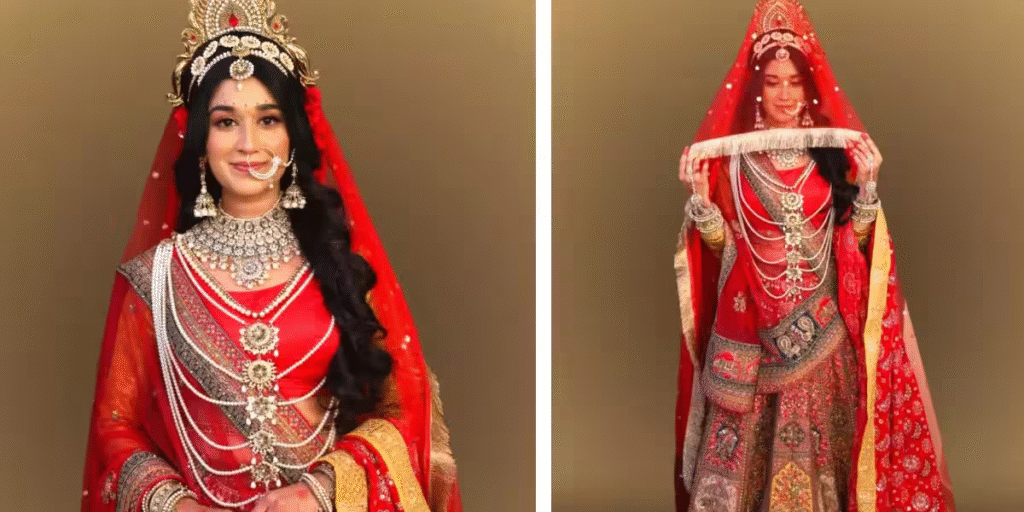
| Ayodhya (Royal) | Yellow, crimson, and deep green fine silks (kauseya) with zari borders | Maang tikka, karnphool, layered haars, bajuband, kamarbandh, gold bangles |
| Exile (Vanvas) | Natural yellow or saffron cotton drapes, simple woven textiles | Wildflowers, wooden or seed beads, minimal woven grass accessories |
In the Sundara Kanda of the Valmiki Ramayan, a crucial plot element relies on jewellery identification: Hanuman recognizes Sita in Lanka by matching the specific ornaments that Rama had previously described. This underscores how central specific jewellery pieces were to identity and status.
Shri Ram and Lakshman: Kings and Warriors
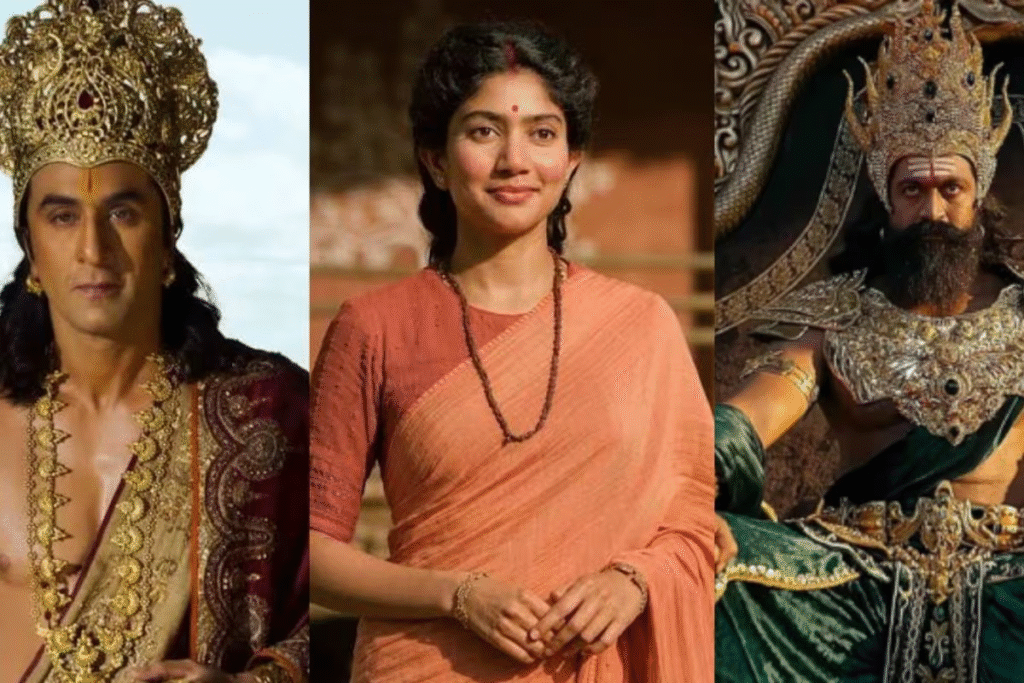
Shri Ram and Lakshman are traditionally depicted wearing yellow (Peetambara) or saffron garments, symbolizing purity, righteousness, and auspiciousness.
- Royal Ayodhya Style: Finely woven silk dhotis, embroidered angavastrams, gold armlets (bajuband), chest plates or decorative neckpieces, and high-pointed crowns (mukuts).
- Forest Exile Style: Simple saffron or natural bark-cloth (valkala) drapes, secured with leather or woven waist bands, paired with wooden foot protectors (padukas) and quiver straps across the chest.
- Warrior Form: Reinforced waistguards, protective wrist cuffs (manibandha), and functional shoulder drapes designed to leave the drawing arm unencumbered.
Ravan: The Grandeur of Lanka
As the ruler of Lanka, Ravan’s sartorial depictions represent absolute opulence and material power. Artistic traditions portray him in heavy, dark-hued or vibrant red and gold brocades, massive multi-tiered gold mukuts, broad chest guards, and elaborate shoulder armor. His attire emphasizes scale, authority, and intimidation.
3. Traditional Jewellery of the Epic Era
Ancient Indian adornment was sophisticated, utilizing gold, silver, pearls (mukta), rubies, emeralds, and intricate metalwork. The National Museum of India documents over 5,000 years of continuous jewellery-making heritage in the subcontinent.
                  ┌── Sheeshphool / Maang Tikka (Head)
                  ├── Karnphool / Kundal (Ears)
                  ├── Haar / Necklaces (Chest)
ANCIENT ADORNMENT ┼── Bajuband (Upper Arms)
                  ├── Kangan / Bangles (Wrists)
                  ├── Kamarbandh (Waist)
                  └── Payal / Nupur (Ankles)
- Maang Tikka & Sheeshphool: Head ornaments set along the hair parting or framing the hairline.
- Haar & Neckpieces: Ranging from close-fitting chokers to long, multi-strand pearl and gold necklaces.
- Karnphool & Kundal: Large, floral-shaped ear studs or heavy hoops, often supported by hair chains to bear their weight.
- Bajuband (Armlet): Worn tightly around the upper bicep, popular among both male warriors and royal women.
- Kamarbandh (Waistband): Heavy metallic belts designed to hold lower drapes in place while accentuating body posture.
- Payal & Nupur: Silver or gold anklets fitted with small bells (ghungroos) that sounded with movement.
4. Hairstyles, Accessories, Footwear, and Fabrics
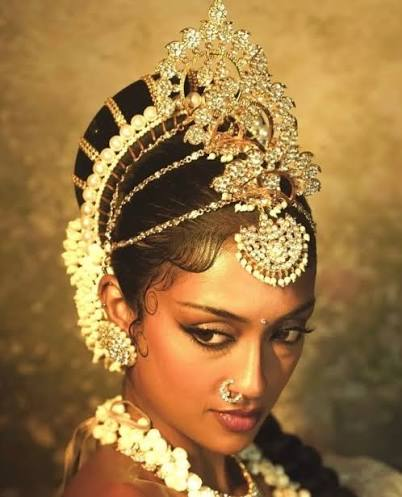
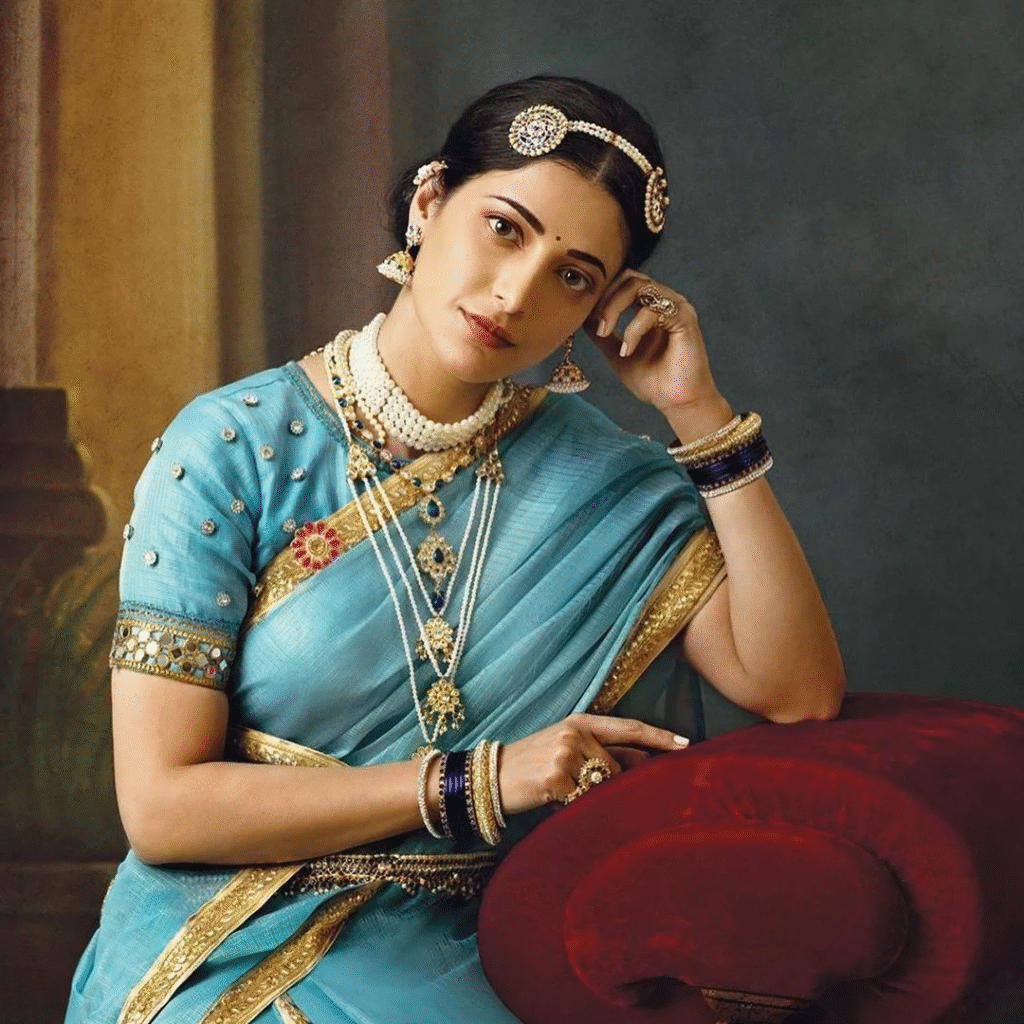
Hairstyles & Floral Decor
Hairstyles in ancient iconography carried deep symbolic meaning:
- Sita’s Hairstyles: Typically styled in a long braid (veni) or a smooth low bun (juda), decorated with fresh jasmine garlands (gajras) or elaborate gold hairpins (jadai billai).
- Ascetic Hair (Jata): During exile, Shri Ram and Lakshman coiled their long hair into a high knot (jatamukuta), a practice characteristic of forest hermits.
Traditional Footwear
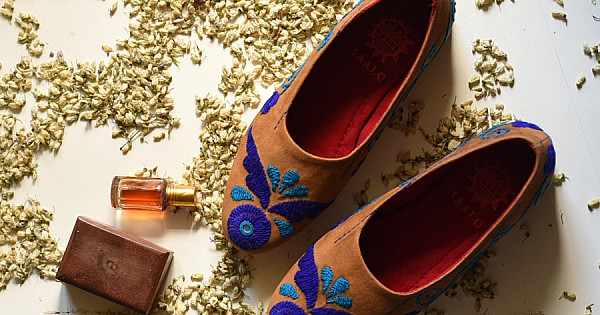
The primary footwear of the era was the Paduka—a wooden sandal featuring a sole raised on two posts with a knob held between the first two toes.
When Bharat ruled Ayodhya as a representative in Rama’s absence, he placed Shri Ram’s gold-adorned wooden padukas on the throne, establishing the footwear as an ultimate symbol of royal authority and presence.
Textile Craftsmanship
The textiles referenced throughout the epic reflect India’s early mastery over natural fibers:
- Cotton (Karpasa): Breathable, comfortable, and used universally across social strata.
- Silk (Kauseya): Harvested natural silks reserved for rituals, state ceremonies, and royalty.
- Wool (Avika): Heavier woven drapes used in colder northern terrains.
- Bark-cloth (Valkala): Fibrous tree-bark garments adopted specifically during ascetic vows and forest exile.
5. Ancient Aesthetics vs. Today’s Retail Market (2026 Price Guide)
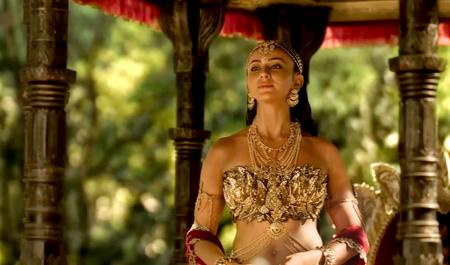
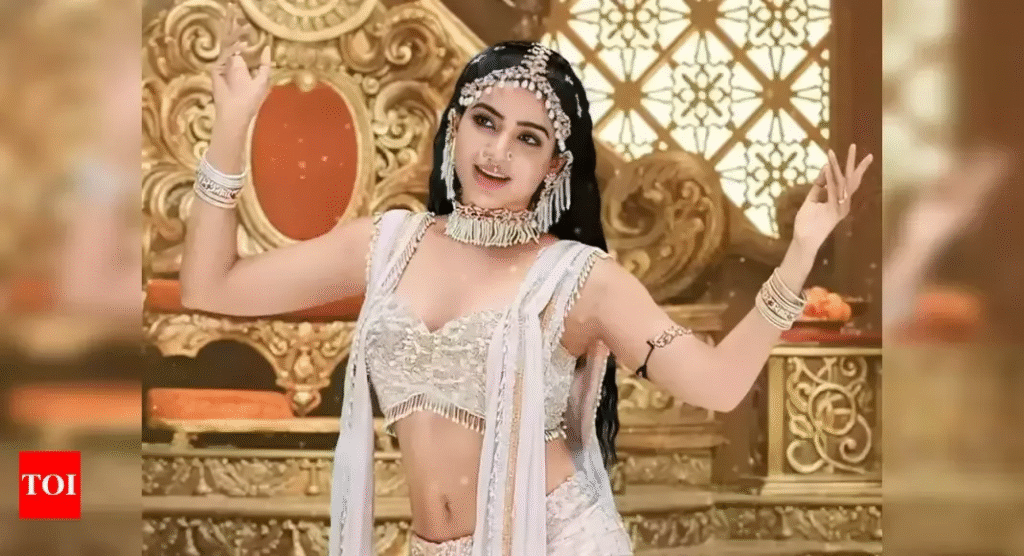
While we cannot calculate an exact historical exchange rate between ancient economies and the modern rupee, we can evaluate what it costs to purchase modern clothing, jewellery, and costumes inspired by the Ramayan today.
Garments & Ensembles
| Item / Ensemble | Style Description | Estimated Price Range (INR) |
|---|---|---|
| Cotton Saree | Simple woven yellow/saffron draping saree | ₹600 – ₹2,000 |
| Traditional Silk-Look Saree | Art silk or poly-blend with zari border | ₹1,500 – ₹5,000 |
| Banarasi Silk Saree | Handloom silk woven with rich zari motifs | ₹5,000 – ₹25,000+ |
| Premium Pure Kanjivaram | Heavy pure silk with real zari work | ₹12,000 – ₹60,000+ |
| Men’s Dhoti & Angavastram Set | Pure cotton with temple borders | ₹800 – ₹2,500 |
| Men’s Pure Silk Dhoti Set | Festive silk dhoti with golden border | ₹2,500 – ₹8,000 |
| Full Ramleela Stage Costume | Stitched performance outfit with accessories | ₹3,000 – ₹12,000 |
Jewellery & Accessories
| Accessory Type | Material / Quality Tier | Estimated Price Range (INR) |
|---|---|---|
| Maang Tikka / Sheeshphool | Artificial / Kundan Glass / Real 22K Gold | ₹200 (Artificial) – ₹45,000+ (Gold) |
| Temple Necklace (Haar) | Brass-Gold Plated / Silver Replica / Solid Gold | ₹1,200 (Plated) – ₹1,500,000+ (Solid Gold) |
| Bajuband (Armlet) | Base Metal Alloy / Silver Temple / Gold | ₹350 (Alloy) – ₹35,000+ (Gold) |
| Kamarbandh (Waistband) | Imitation Pearl & Brass / 925 Silver | ₹500 (Imitation) – ₹15,000 (Silver) |
| Wooden Paduka / Khadau | Carved Sheesham Wood with Brass Inlay | ₹400 – ₹1,800 |
| Stage Mukut (Crown) | Lightweight Molded Brass / Velvet with Zari | ₹600 – ₹4,500 |
6. Social Class & Wardrobe Distinctions
Was gold and silk available to everyone during the Ramayan period?
Historical and literary evidence indicates that luxury textiles and fine metals were concentrated among ruling elites, merchants, and royal households.
┌────────────────────────────────────────────────────────┐
│                    ROYALTY & ELITES                    │
│   • Pure silk garments (Kauseya) with gold threads     │
│   • Gold, pearl, and precious gemstone jewellery       │
│   • Carved crowns (Mukuts) and ornate waistbands       │
└───────────────────────────┬────────────────────────────┘
                            │
                            ▼
┌────────────────────────────────────────────────────────┐
│                   ORDINARY CITIZENS                    │
│   • Fine unstitched cotton garments (Karpasa)          │
│   • Silver, brass, terracotta, and bone ornaments      │
│   • Natural floral decorations and simple footwear     │
└───────────────────────────┬────────────────────────────┘
                            │
                            ▼
┌────────────────────────────────────────────────────────┐
│                 FOREST COMMUNITIES / ASCETICS          │
│   • Woven grass, coarse cotton, and bark-cloth         │
│   • Seeds (Rudraksha), wood, and fresh flower jewelry  │
│   • Simple wooden padukas or barefoot travel           │
└────────────────────────────────────────────────────────┘
The contrast between Ayodhya’s splendour and the simplicity of the forest journey is a deliberate thematic element of the epic. Draping oneself in simple cotton or bark signified a spiritual transition—stepping away from material luxury toward duty (Dharma) and restraint.
7. How to Recreate Ramayan-Inspired Outfits Today
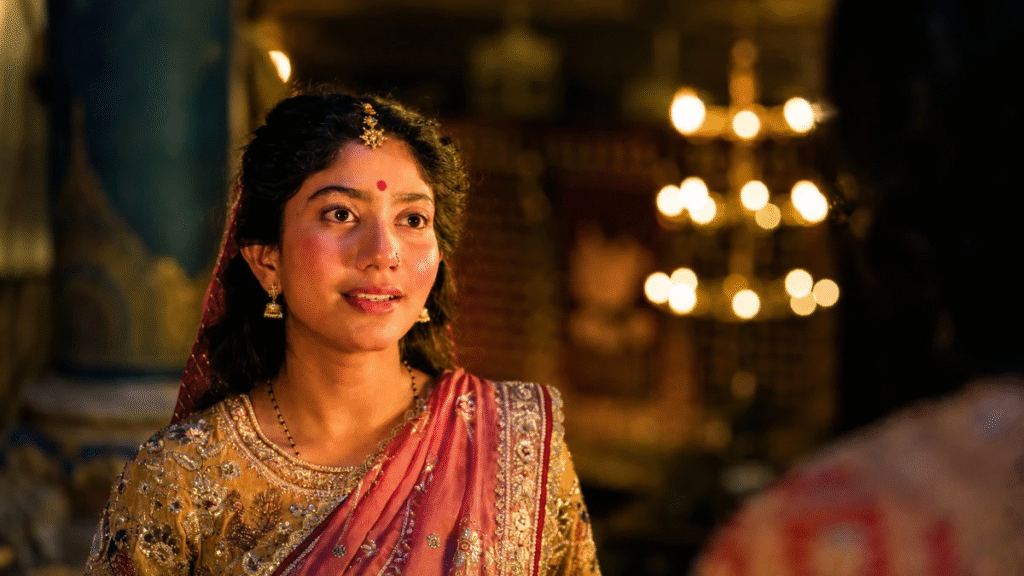
Recreating these classic looks for festive occasions, weddings, or stage performances does not require a massive budget. By selecting key signature elements, you can achieve an authentic look across different price tiers.
Recreating Mata Sita’s Look
- The Base: Choose a sunny yellow, mustard, or deep crimson saree in silk or silk-blend with a gold zari border.
- The Drape: Wrap the saree with a classic seedha pallu or traditional drape over the front shoulder.
- Jewellery: Layer a temple-style choker with a longer pearl neckpiece. Add a simple maang tikka, jhumkas, and gold kangan.
- Hair: Style into a long braid decorated with fresh white jasmine flowers (gajra).
Recreating Shri Ram’s Look
- The Base: A crisp mustard-yellow or saffron silk dhoti paired with a matching angavastram draped across one shoulder.
- The Details: A wide metallic or embroidered waistband (kamarbandh) to hold the waist drape.
- Accessories: Gold-toned armlets (bajuband), a neat chest ornament, and leather or dark wooden sandals.
- The Crown: A tall golden mukut featuring subtle red or green stone details.
Why Ramayan Fashion Remains Timeless
The enduring appeal of Ramayan fashion lies in its seamless blend of functional utility and spiritual symbolism. It proves that unstitched cloth, when folded with skill and paired with handcrafted jewellery, creates an aura of timeless majesty.
Whether seen in temple carvings, grand wedding trousseaus, or modern runway collections inspired by heritage craft, the sartorial legacy of the Ramayan remains a vital, living part of Indian identity.
Frequently Asked Questions
The OfferDeals team
Written and checked by the people who run OfferDeals.