
Finding the perfect pair of shoes can feel like a massive chore. One day you think you’ve found the perfect sneakers, and the next day you’re dealing with blisters, sore arches, or feet that feel like they’re trapped in an oven. Whether you are training for a 5K, walking thousands of steps a day at school or work, or just trying to look good without sacrificing your comfort, your footwear matters.
Among the countless sneaker brands out there today, New Balance has broken through the noise. Once known mainly as the “dad shoe” brand, it has completely transformed into a global favorite. Today, everyone from hardcore marathon runners to fashion influencers swears by them.
But here is the catch: New Balance has a lot of options. Between the numbers, the letters, and the different tech names, picking the right pair can feel a bit overwhelming. This human-friendly guide will break down everything you need to know in plain English so you can find the exact pair that fits your feet, your style, and your daily routine.
Why New Balance is Absolutely Everywhere Right Now
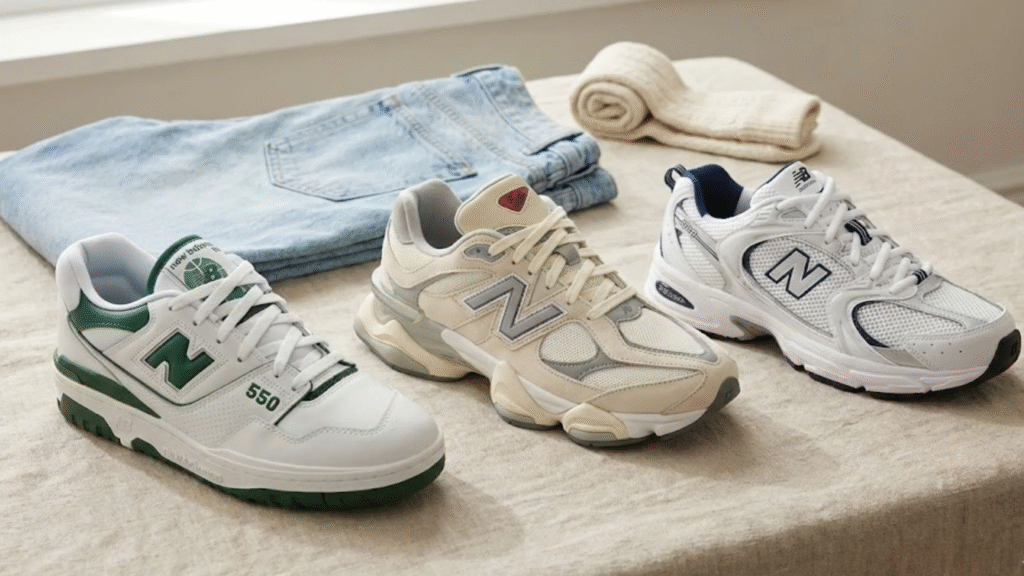
It is rare for a brand to satisfy both professional athletes and people who just want a cool outfit, but New Balance manages to pull it off. They did not achieve this overnight. For decades, the brand has focused on a few core principles that set them apart from the competition.
1. Comfort Always Comes First
While some brands design shoes purely for the aesthetic and figure out the comfort later, New Balance works the other way around. They focus heavily on how the foot moves naturally. Their designs feature advanced cushioning, highly supportive midsoles, and breathable materials that keep your feet happy even if you are standing all day long.
2. They Actually Care About Foot Width
We don’t all have the same shaped feet. If you have wide feet, you probably know the struggle of having to buy shoes that are a size too big just so your toes don’t feel squished. New Balance is famous for offering shoes in multiple widths—from narrow to extra-wide. This means you can get a shoe that actually matches the true shape of your foot.
3. The Perfect Mix of Retro and Modern
New Balance has mastered the art of the “throwback.” They have a deep archive of classic running shoes from the 1980s and 1990s that look incredibly stylish today. At the same time, they use cutting-edge technology for their modern performance gear. It is the best of both worlds.
Step 1: Figure Out Your Primary Purpose
Before you start looking at colors and designs, you need to ask yourself one simple question: What am I actually going to do in these shoes? Different activities put different types of stress on your feet. Choosing a shoe built for your specific lifestyle will save you from pain down the road.
| Activity | What Your Feet Need | Best New Balance Focus |
| Running | High shock absorption, lightweight materials, forward momentum. | Performance Running (Fresh Foam or FuelCell) |
| Walking & Standing | Long-term arch support, durable outsoles, solid heel stability. | Walking or Lifestyle series |
| Gym & Cross-Training | Flat, stable bases for lifting; side-to-side support. | Training models |
| Casual Everyday Wear | Versatile style, easy to clean, comfortable for walking around. | Classics / Lifestyle (e.g., 574, 327, 550) |
Pro Tip: Do not buy a dedicated, high-end running shoe if you only plan to wear it to sit at a desk or walk the dog. Similarly, do not use a flat lifestyle sneaker for your morning runs. Match the shoe to the action!
Step 2: The Art of Getting the Right Fit
An expensive shoe with amazing technology will still hurt your feet if it’s the wrong size. Getting the right fit is about more than just reading the number on the box. Here are a few golden rules for finding your true size:
- Shop Later in the Day: Your feet naturally swell and expand as you walk around throughout the day. Because of this, it is always smartest to try on shoes in the afternoon or evening. If they fit perfectly first thing in the morning, they might feel way too tight by 4:00 PM.
- Give Your Toes Some Room: When you stand up, there should be about a thumb’s width of space between your longest toe and the very front of the shoe. You should be able to wiggle your toes freely.
- Check the Heel: Your heel should feel locked into the back of the shoe. If your heel slips up and down when you walk, you are going to end up with nasty blisters.
- Don’t Rely on a “Break-In” Period: Modern sneakers should feel comfortable the moment you put them on. If a shoe pinches, rubs, or hurts in the store, do not assume it will get better over time. Pass on it and try another pair.
Understanding the Tech: Fresh Foam vs. FuelCell
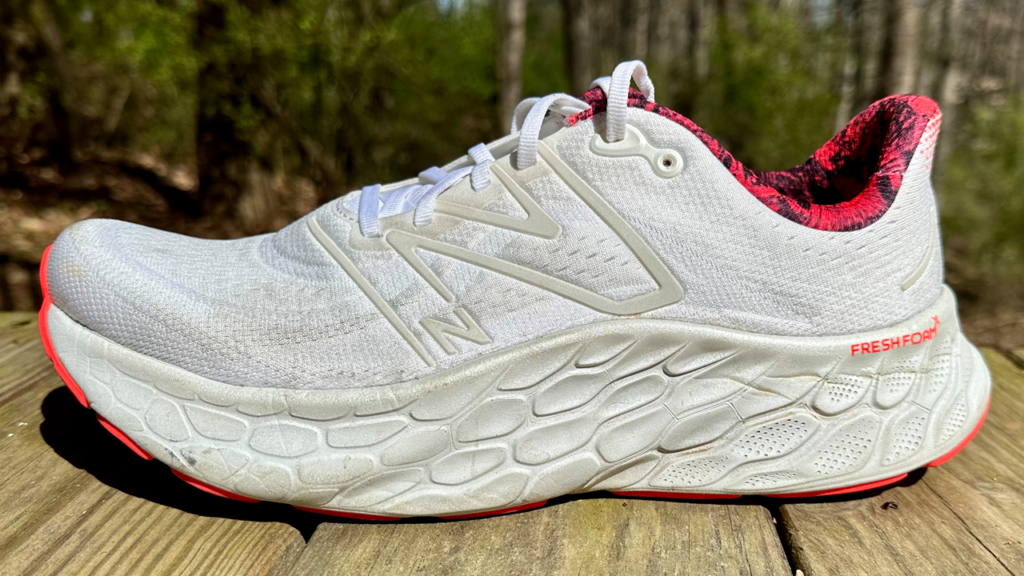
When you browse New Balance shoes, you will see a lot of talk about their cushioning technology. To keep it incredibly simple, New Balance has two main types of foam that they use in their modern shoes:
Fresh Foam (The Plush Couch)
Think of Fresh Foam as a thick, soft mattress for your feet. It is designed to absorb a ton of impact and provide a super smooth, cloud-like ride. If you love a soft, cushioned feel for long walks, daily runs, or standing for hours, look for models like the Fresh Foam X 1080 or the Fresh Foam More.
FuelCell (The Trampoline)
FuelCell is a completely different vibe. It is firmer, springier, and designed to push you forward. When your foot hits the ground, FuelCell bounces back quickly, giving you a burst of energy. This is perfect for runners who want to go fast, or anyone who prefers a snappy, responsive feel under their feet rather than a super soft, sinking feeling.
Neutral vs. Stability: What Does Your Foot Do?
When we walk or run, our feet roll across the ground. How your foot rolls determines whether you need a neutral shoe or a stability shoe.
Neutral Alignment:  [ Foot stays relatively straight and centered ]
Overpronation:      [ Foot rolls heavily inward, flattening the arch ]
- Neutral Shoes: If your feet land relatively straight and your arches do not collapse inward, you want a neutral shoe. These focus purely on cushioning and flexibility.
- Stability Shoes: If your ankles and arches roll heavily inward when you step (a trait known as overpronation), you need a stability shoe. New Balance adds special, firmer material to the inside edge of these shoes to act as a guardrail, keeping your foot properly aligned. The New Balance 860 series is a legendary option for people who need this extra support.
The Best New Balance Lifestyle Sneakers for Everyday Vibes
If you are looking for shoes purely for school, work, hanging out, and looking clean, New Balance has some of the most iconic lifestyle sneakers on the market. Here are a few crowd favorites that look great with almost any outfit:
The New Balance 574
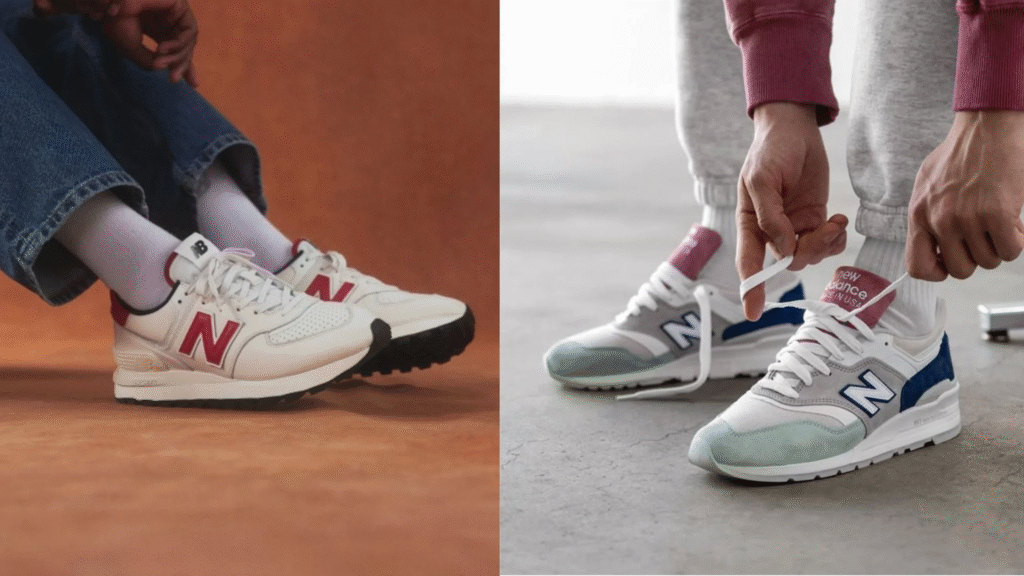
This is the ultimate classic. It has a chunky, retro running silhouette that has been popular for decades. It is affordable, comes in hundreds of colors, and uses a mix of suede and mesh that handles everyday wear beautifully.
The New Balance 550
If you love old-school basketball aesthetics, the 550 is for you. It features a low-top leather design that gives off heavy 1980s vintage vibes. It looks incredible with baggy jeans, shorts, or cargo pants.
The New Balance 327
The 327 is a modern take on a 1970s racing shoe. It features a unique, oversized “N” logo on the side and a spiked rubber sole that extends up the back of the heel. It is lightweight, bold, and perfect for making a statement.
The New Balance 2002R and 1906R
These models sit right at the intersection of “dad shoe” comfort and high-fashion streetwear. They feature complex, technical designs with tons of mesh and overlay details. They are incredibly comfortable because they use high-end running shoe midsoles, making them perfect for long days of walking.
Materials Matter: Keeping Your Feet Cool and Dry
The upper part of the shoe plays a massive role in how comfortable you feel throughout the day.
Mesh: If you live in a hot climate or your feet get sweaty easily, always look for shoes with plenty of mesh. It allows air to circulate, keeping your feet cool.
Suede and Leather: These materials look premium and are highly durable, making them excellent for casual lifestyle wear. However, they don’t breathe as well as mesh and require a little more care if they get muddy or wet.
Frequently Asked Questions
1.Are New Balance shoes good for people with flat feet?
Yes! New Balance is one of the best brands for flat feet. Because they offer wide widths and dedicated stability models (like the 860 or 940), people with flat feet or low arches can easily find shoes that provide the right structural support.
2.Do New Balance shoes fit true to size?
For the most part, yes. However, certain lifestyle models made of stiff leather (like the 550) can feel a bit narrow at first. If you have wider feet, it is often wise to order the “Wide” option rather than sizing up in length.
3.How can I clean my New Balance suede sneakers?
Never throw suede shoes into a washing machine! Instead, let any mud dry completely, then use a dedicated suede brush to gently scrape the dirt away. For stubborn stains, use a suede eraser. Water can ruin the texture of suede, so try to keep them dry.
4.What is the difference between New Balance numbers?
Generally, the higher the number, the more technology and premium materials are packed into the shoe. For example, a 990 or a 1080 is going to feature much more advanced cushioning and support than a 574.
5.How long do New Balance running shoes last?
If you are using them for actual running, most performance shoes should be replaced every 300 to 500 miles. If you notice that the tread on the bottom is smooth, or your knees and arches start hurting after a normal walk, it is likely a sign that the internal foam has worn out and it’s time for a new pair.