
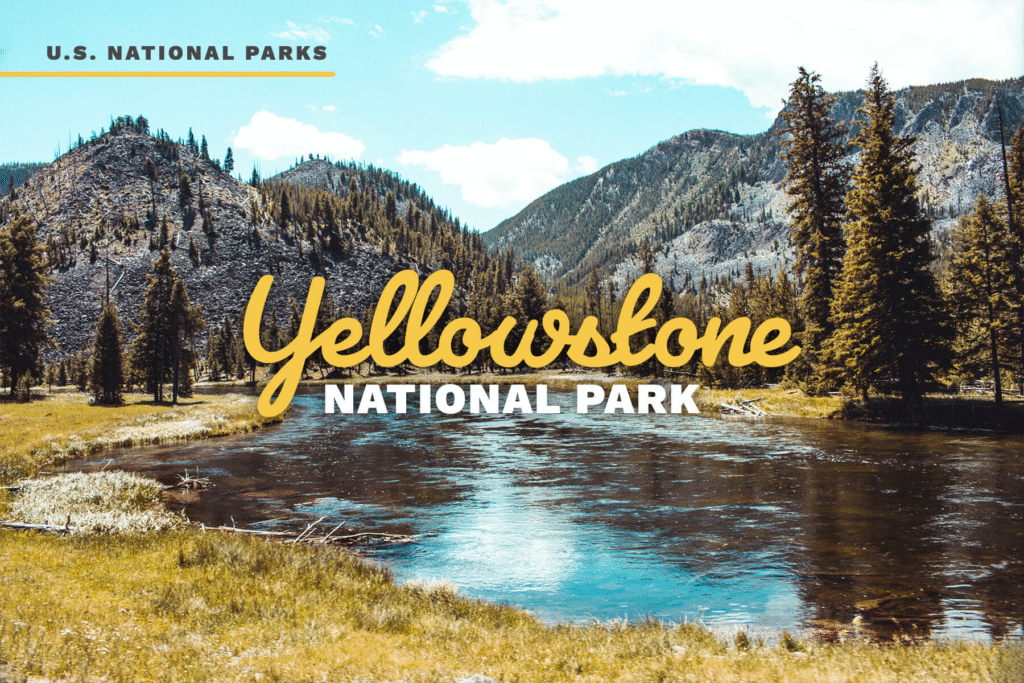
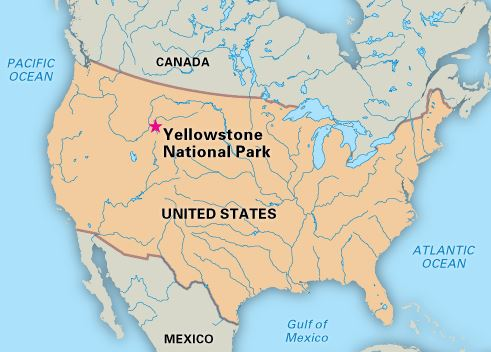
Yellowstone National Park in winter feels like a peaceful frozen paradise. When snow blankets the valleys, forests, and mountains, the park becomes quieter and more dramatic than any other season. Steaming geysers rise through icy air, rivers freeze into glass-like patterns, and wildlife moves freely across white landscapes. Unlike summer, winter offers fewer crowds, allowing visitors to experience Yellowstone in its most raw and natural form. For travelers who love nature, photography, and adventure, winter is one of the best times to explore this iconic national park.
Why Yellowstone Is Special in Winter
- Unique winter-only activities
- Fewer tourists and a calm atmosphere
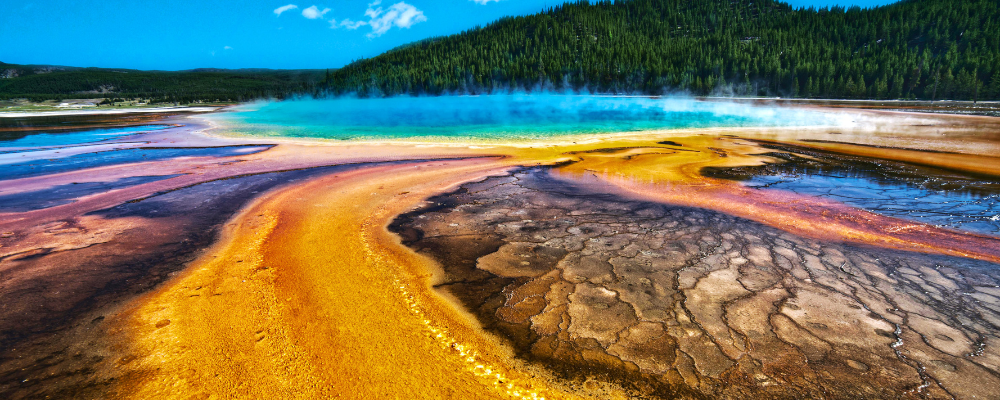
- Snow-covered geysers create breathtaking scenery
- Better chances to spot wildlife
Winter Weather in Yellowstone National Park
Winter weather in Yellowstone is cold and extreme, but it adds to the park’s beauty. Temperatures often stay below freezing, and heavy snowfall is common. Days are shorter, but the snow reflects sunlight, making landscapes appear brighter and more magical. Weather conditions can change suddenly, so travelers must be well-prepared.
Average Winter Temperatures
| Month | Temperature Range |
|---|---|
| December | -10°C to 0°C |
| January | -15°C to -5°C |
| February | -12°C to 0°C |
| March | -10°C to 5°C |
Travel Tip: Always dress in layers and check weather updates daily.
Wildlife Viewing During Winter
Winter is one of the best seasons for wildlife viewing in Yellowstone. Snow makes animals easier to spot, and many species move to lower elevations in search of food. Predators and prey are more active, offering visitors rare and memorable sightings.
Animals Commonly Seen in Winter
- Wolves (especially in Lamar Valley)
- Bison walking through deep snow
- Elk and deer
- Coyotes and foxes
- Bald eagles
Things to Do in Yellowstone in Winter
Although many roads are closed, Yellowstone still offers unforgettable winter experiences. Special transportation and guided activities allow visitors to safely explore the park while protecting the environment.
Snowcoach Tours
Snowcoaches are enclosed vehicles designed specifically for snowy conditions. They are the most comfortable and popular way to see Yellowstone in winter.
Highlights of Snowcoach Tours
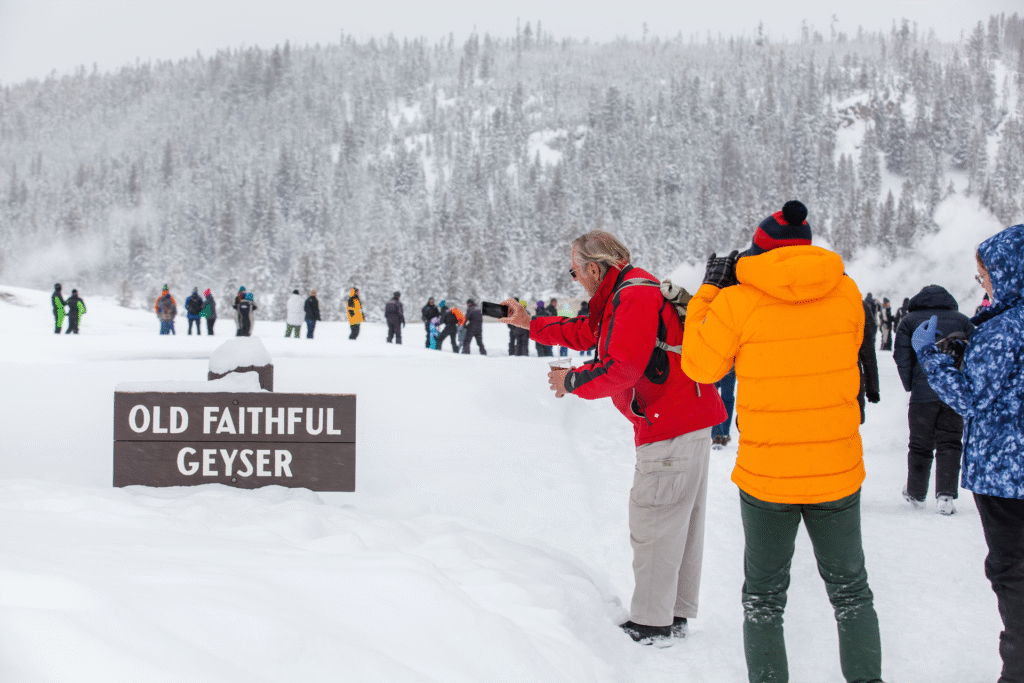
- Visit Old Faithful geyser
- Explore Mammoth Hot Springs
- Spot wildlife along scenic routes
Snowmobiling Adventures
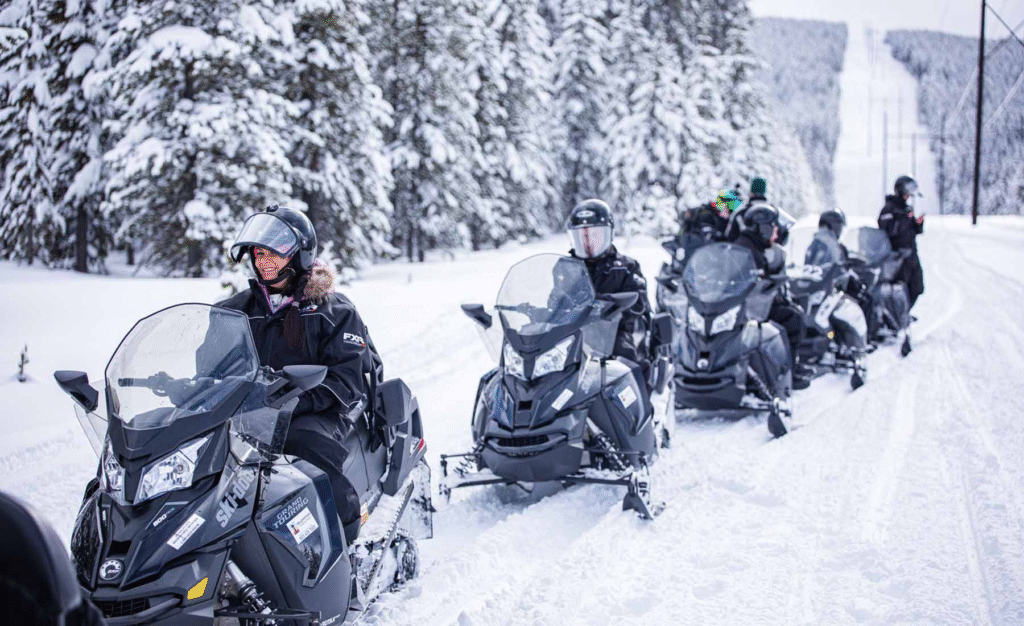
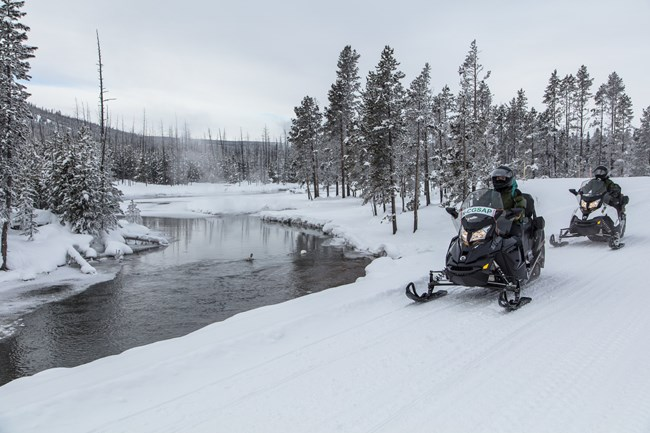
Snowmobiling is perfect for travelers who want excitement and speed. Most snowmobile trips are guided to ensure safety and reduce environmental impact.
Best for
- Adventure lovers
- Group and couple travel
Snowshoeing and Cross-Country Skiing
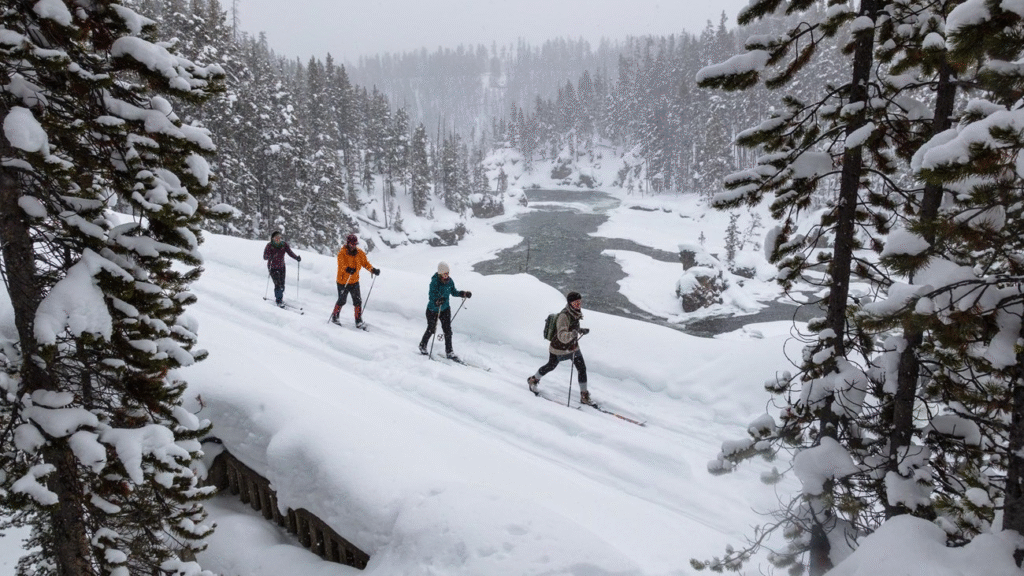
These peaceful activities allow visitors to explore Yellowstone at a slower pace. You can enjoy untouched snow, quiet trails, and close-up views of winter landscapes.
Popular Areas
- Mammoth Hot Springs
- Old Faithful area
- Lamar Valley
Where to Stay in Winter
Only a few lodges inside the park remain open during winter, but they offer warmth, comfort, and excellent access to major attractions. Nearby towns also provide a range of accommodation options.
Best Winter Accommodation Options
- Mammoth Hot Springs Hotel – Open year-round
- Old Faithful Snow Lodge – Ideal for geyser exploration
- Hotels and cabins in Gardiner and West Yellowstone
What to Pack for a Winter Trip
Packing correctly is essential for a safe and enjoyable winter visit. Cold temperatures and snow require proper winter gear.
Essential Winter Packing List
- Camera and binoculars
- Thermal base layers
- Heavy insulated winter jacket
- Waterproof snow boots
- Gloves, scarf, and warm hat
- Sunglasses to reduce snow glare
Winter Safety Tips
Winter travel in Yellowstone requires extra caution. Wildlife and geothermal areas can be dangerous if safety rules are ignored. Preparation is the key to a safe trip.
Important Safety Guidelines
- Stay on marked trails and boardwalks
- Keep a safe distance from wildlife
- Monitor weather and road conditions
- Book tours and lodging in advance
- Carry food, water, and emergency supplies
Best Time to Visit Yellowstone in Winter
Each winter month offers a different experience, depending on what you want to see and do.
Month-by-Month Experience
- December: Fresh snowfall and holiday atmosphere
- January–February: Best wildlife viewing and deep winter scenery
- March: Slightly warmer temperatures and longer days
Best Overall Time: January and February
Yellowstone National Park in winter offers a rare and unforgettable travel experience. From steaming geysers surrounded by snow to wildlife roaming freely across frozen valleys, the park shows its most dramatic and peaceful side. With proper planning and preparation, a winter trip to Yellowstone can become one of the most memorable journeys of your life.
#YellowstoneNationalPark #YellowstoneInWinter #WinterTravelUSA #NationalParks #Carrerbook#Anslation#TravelGuide #SnowAdventure #NatureLovers #USATravel