The adventure-touring segment in India has matured significantly over the past few years. What started with utilitarian, go-anywhere machines has evolved into a demand for high-speed highway capability, refined power delivery, and long-distance comfort. The Royal Enfield Himalayan has played a massive role in shaping this culture. From the original 411cc single to the high-revving Sherpa 450, it has been the default choice for mountain passes and cross-country road trips.
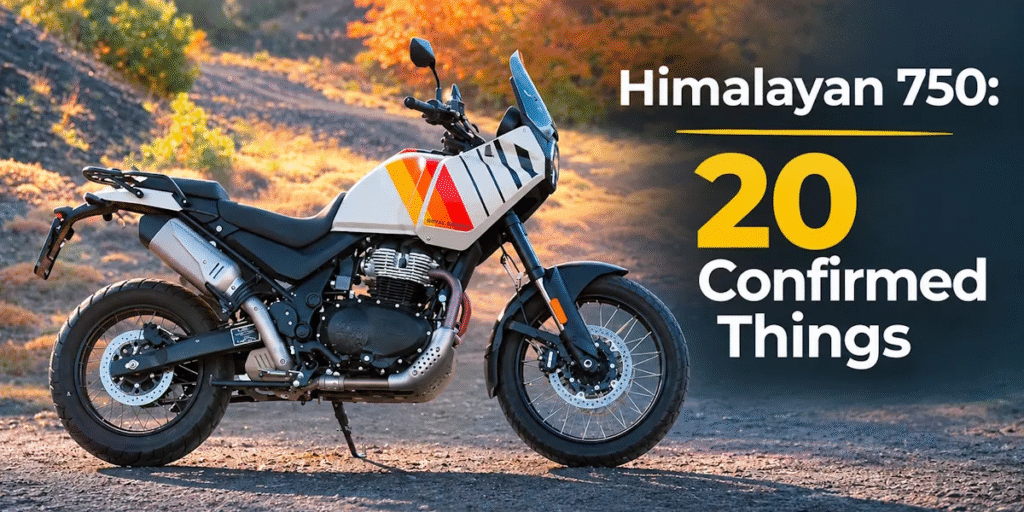
Now, Royal Enfield is stepping into the middleweight adventure market with the upcoming Himalayan 750. Positioned as the new flagship in their adventure lineup, this twin-cylinder tourer aims to bridge the gap between accessible single-cylinder bikes and expensive imported adventure motorcycles.
If you are considering a upgrade for long-distance touring, mountain runs, or simply want to understand what this new machine brings to the table, here is a detailed, rider-focused breakdown of the Royal Enfield Himalayan 750.
1. What Is the Royal Enfield Himalayan 750?

The Royal Enfield Himalayan 750 is an upcoming middleweight adventure-touring motorcycle built for riders who find single-cylinder engines limiting on long, high-speed highway stretches. While smaller adventure bikes excel in tight trails and city traffic, they often run out of breath or buzz excessively when cruising at triple-digit speeds with full luggage and a pillion.
       [ Himalayan 450 ]                     [ Himalayan 750 ]
 • 452cc Single-Cylinder                • ~750cc Parallel-Twin
 • Agile Off-Road & Trails              • High-Speed Highway Cruising
 • Solo Touring & Commuting             • Heavy Luggage & Pillion Long Hauls
The Himalayan 750 shifts the focus toward effortless mile-crunching. It retains the rugged, practical character that defined the Himalayan brand, but pairs it with a larger twin-cylinder motor, elevated touring ergonomics, and an upgraded tech suite. It is designed for the rider who wants to cover 600 kilometers of expressways during the day and comfortably tackle broken mountain roads by evening.
2. Design, Ergonomics, and Touring Practicality
At first glance, the Himalayan 750 has a clear, tall adventure-tourer silhouette. Royal Enfield has deliberately retained traditional design cues—like the classic round LED headlight—while wrapping the chassis in far more substantial bodywork than the 450.
| Design Aspect | Practical Touring Value |
|---|---|
| Front Fairing & Tall Screen | Redirects high-speed windblast over the helmet, reducing neck fatigue. |
| Muscular Fuel Tank | Built for long ranges between fuel stops with comfortable knee-recesses. |
| Split-Seat Layout | Offers wide, supportive seating for both rider and pillion during 8-hour riding days. |
| Integrated Luggage Rack | Solid tail section designed to mount top racks, pannier stays, and heavy dry-bags. |
Rider Ergonomics
An adventure bike’s primary job is keeping you fatigue-free. The Himalayan 750 features a neutral, upright riding triangle: wide handlebars set at a comfortable reach, mid-set footpegs that allow easy standing on rough patches, and a deep seat pocket.
However, given its twin-cylinder layout, standover width and curb weight will be higher than the 450. Riders with shorter inseams will want to check how easily they can plant their feet flat at stops, especially when balancing a fully loaded bike on uneven terrain.
3. Engine Performance and Powertrain Dynamics
The real talking point of the Himalayan 750 is its powertrain. Moving from a single-cylinder setup to a parallel-twin completely changes how a motorcycle feels on open roads.
+-------------------------------------------------------------------------+
|                  EXPECTED PERFORMANCE SPECIFICATIONS                   |
+------------------------------------+------------------------------------+
| Engine Type                        | ~750cc Parallel-Twin, Liquid-Cooled|
| Power Output (Estimated)           | 50 – 60 bhp                        |
| Torque Output (Estimated)          | 60 – 65 Nm                         |
| Transmission                       | 6-Speed Manual with Assist & Slipper|
+------------------------------------+------------------------------------+
Why a Parallel-Twin Matters for Highway Touring
- Vibration Reduction: Parallel-twin engines run inherently smoother at high RPMs compared to large-displacement singles. This means less numbness in your hands and feet after hours on the highway.
- Low-End & Mid-Range Pull: High torque output spread lower in the rev range means you won’t need to constantly downshift to overtake slow-moving trucks on gradients.
- Pillion and Luggage Capacity: Extra horsepower ensures the bike doesn’t struggle when fully loaded with hard panniers, a top box, and a passenger.
The motor is paired with a 6-speed gearbox, calibrated to offer a tall top gear for quiet, low-RPM highway cruising.
4. Chassis, Suspension, Wheels, and Braking
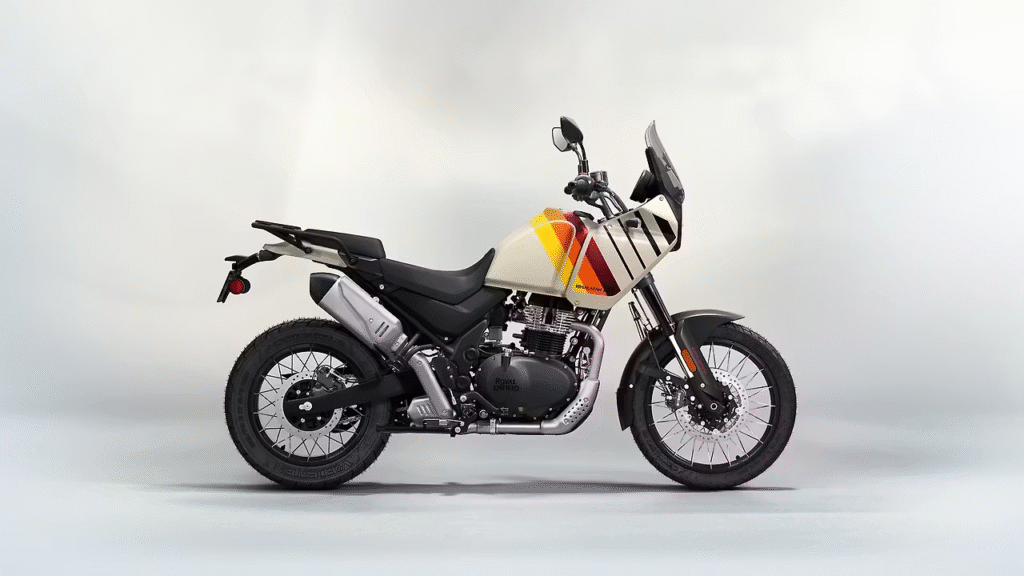
An adventure motorcycle must handle everything from smooth tarmac expressways to gravel-strewn mountain bypasses. The chassis and running gear of the Himalayan 750 reflect a balanced road-biased adventure-touring setup.
Suspension Setup
The motorcycle features heavy-duty inverted (USD) front forks and a rear monoshock. Crucially, the rear suspension includes a remote preload adjuster, allowing riders to quickly stiffen or soften the rear shock depending on whether they are riding solo, carrying luggage, or carrying a pillion.
Front USD Forks (Inverted) -------> High high-speed stability & flex-resistance
Rear Monoshock (Remote Adjust) ---> Quick setup changes for luggage/pillion loads
Wheel Geometry: 19-inch Front / 17-inch Rear
Royal Enfield has opted for a 19-inch front and 17-inch rear wheel setup.
- A 21-inch front wheel (found on hard-enduro bikes) is ideal for rolling over large rocks and deep off-road ruts, but can feel vague on twisty tarmac.
- A 19-inch front wheel offers the ideal middle ground: sharp, confident handling on mountain twisties, combined with enough diameter to roll over potholes and unpaved gravel roads effortlessly.
Stopping Power
Given the increased weight and speed capabilities of a 750cc machine, the braking system gets a significant upgrade to dual disc brakes at the front and a single disc at the rear, backed by dual-channel ABS.
5. Technology and Electronic Rider Aids
While Royal Enfield has traditionally favored mechanical simplicity, the Himalayan 750 incorporates modern touring electronics designed to enhance long-distance safety and convenience.
- Full-Colour TFT Display with Navigation: Featuring integrated Google Maps navigation, smartphone connectivity for calls/music, and clear readouts for gear position, range-to-empty, and ambient temperature.
- Electronic Cruise Control: Maintains a steady speed on flat, open expressways, letting you rest your right wrist during long highway stretches.
- Traction Control System (TCS): Regulates rear-wheel spinning when accelerating on slippery, wet, or slushy roads.
- Tyre Pressure Monitoring System (TPMS): Provides real-time pressure readouts on the dash, alerting you to slow punctures before they become dangerous on remote routes.
6. Head-to-Head: Himalayan 750 vs. Himalayan 450
Choosing between the 450 and the upcoming 750 isn’t just about buying the bigger engine—it comes down to your primary riding environment and touring style.
+--------------------------+----------------------------+----------------------------+
| Feature                  | Himalayan 450              | Himalayan 750              |
+--------------------------+----------------------------+----------------------------+
| Engine Configuration     | 452cc Single-Cylinder      | ~750cc Parallel-Twin       |
| Power / Torque (Est.)    | 40 bhp / 40 Nm             | 50-60 bhp / 60-65 Nm       |
| Primary Focus            | Dual-Sport / Off-Road Trail| Long-Distance Highway ADV  |
| Off-Road Capability      | High (Lighter, 21" front)  | Moderate (Heavier, 19" front)|
| Highway Cruising Speed   | 100 - 110 km/h             | 120 - 140 km/h effortlessly|
| Expected Ex-Showroom     | ₹2.85 L - ₹3.00 L          | ₹4.50 L - ₹5.00 L (Est.)   |
+--------------------------+----------------------------+----------------------------+
7. Is the Himalayan 750 Right for You?

The Himalayan 750 is tailored for specific rider profiles. Here is how to evaluate if it fits your garage:
Who Should Buy It?
- Experienced Highway Tourers: Riders who regularly cover multi-state distances and need a machine that can maintain 120 km/h all day without strain.
- Two-Up Adventure Travelers: Couples or riders who frequently carry a pillion along with heavy saddlebags.
- Upgraders from 300-400cc Bikes: Current owners of Himalayan 411s, 390 Adventure, or Scram models looking for the next logical step in power and refinement.
Who Should Look Elsewhere?
- Hardcore Off-Road Enthusiasts: If your idea of adventure is single-track trails, technical mud sections, and river crossings, a lighter dual-sport bike like the Himalayan 450 or a rally-focused machine will be much easier to manage.
- Daily Urban Commuters: Navigating tight, bumper-to-bumper city traffic on a heavy twin-cylinder ADV can become tiring quickly.
8. Expected Pricing, Launch Timeline, and Pre-Purchase Checklist
Expected Price and Launch
The Royal Enfield Himalayan 750 is expected to launch in India around late November 2026, with an estimated ex-showroom price ranging between ₹4.5 lakh and ₹5.0 lakh.
Keep in mind that on-road prices will include road tax, registration, insurance, and optional factory accessories (such as aluminium panniers, engine guards, and touring seats).
Pre-Purchase Checklist for Prospective Buyers
- Take an Extended Test Ride: Test the bike in both tight, low-speed traffic and open stretches. Pay attention to heat management around your legs and low-speed clutch action.
- Evaluate the Wet Weight: Practice moving the motorcycle off its side stand and paddling it backward on an incline to ensure you can comfortably handle its mass.
- Check Accessory Compatibility: If you plan on long-distance trips immediately, check the cost and availability of official luggage systems and crash protection.
- Factor in Running Costs: Twin-cylinder motorcycles come with higher maintenance costs—including premium tyres, larger oil volumes during services, and lower fuel economy compared to single-cylinder bikes.
Final Thoughts
The Royal Enfield Himalayan 750 represents a natural evolution for the brand’s adventure family. By stepping into the middleweight twin-cylinder segment, Royal Enfield is giving long-distance touring riders a high-capability, comfortable option without forcing them into the astronomical price brackets of European imports.
If you prioritize effortless highway performance, pillion comfort, and modern electronics while keeping that rugged Himalayan DNA, the 750 is certainly a motorcycle worth watching closely as final production details emerge.
Frequently Asked Questions
When is the Royal Enfield Himalayan 750 expected to launch in India?
It is anticipated to launch around late November 2026 following its showcase events.
What is the estimated price of the Himalayan 750?
The expected ex-showroom price ranges between ₹4.5 lakh and ₹5.0 lakh.
How does the Himalayan 750 differ from the Himalayan 450?
The 750 features a powerful twin-cylinder engine and highway focus, whereas the 450 uses a single-cylinder setup built for light trails.
Will the Himalayan 750 feature cruise control and navigation?
Yes, it is expected to offer electronic cruise control alongside a TFT display with built-in Google Maps navigation.
Is the Himalayan 750 suitable for off-road riding?
It can handle gravel tracks and mild off-road roads, but its weight and 19-inch front wheel make it primarily a highway tourer.
The OfferDeals team
Written and checked by the people who run OfferDeals.